
Your Energy Is Currency. The Science of Presence and Responsibility
You don’t just walk into a room.
You enter carrying something.
Posture.
Breath.
Tone.
Unresolved tension.
Or grounded steadiness.
People feel it before you speak.
We like to pretend this is metaphor. It isn’t. There is science behind it. And once you understand it, you lose the right to ignore your impact.
Energy is currency.
And most people are spending it carelessly.
Emotional Contagion. We Catch Each Other
Psychologist Elaine Hatfield and colleagues coined the term emotional contagion. Humans unconsciously mimic facial expressions, tone, and body language of those around them. That mimicry feeds back into our own nervous system. Which means we begin to feel what we copy.
Moods spread.
You have felt it. You step into a meeting and something is tight. No one has said anything aggressive. But shoulders are raised. Voices are clipped. You find yourself speaking more cautiously. Walking on eggshells.
That is not weakness. That is biology.
Likewise, you enter a space where someone is calm, open, steady. Your breathing slows. Conversation softens. You feel lighter. Almost like you could dance in the rain.
Nothing mystical happened. Nervous systems synchronised.
Mirror Neurons. Your Brain Rehearses Other People
In the 1990s, neuroscientist Giacomo Rizzolatti discovered mirror neurons. These neurons fire not only when you perform an action, but when you observe someone else performing it.
Your brain partially simulates the internal state of the person in front of you.
So when someone enters agitated, your brain begins mapping agitation. When someone walks in grounded and slow, your brain rehearses steadiness instead.
You are not just seeing people. You are syncing with them.
Which means your internal state is not private. It is broadcast.
Polyvagal Theory. Safety Is Felt, Not Announced
Stephen Porges developed Polyvagal Theory, explaining how the autonomic nervous system constantly scans for cues of safety or threat. This process, called neuroception, happens below conscious awareness.
Tone of voice.
Eye contact.
Facial tension.
Breathing rhythm.
Your nervous system asks one question.
Am I safe here?
If you enter sharp, rushed, irritated, other nervous systems detect threat. Speech tightens. Defensiveness rises. Distance grows.
If you enter regulated, breathing steady, movements deliberate, tone measured, the room settles.
Safety spreads too.
Leadership is not volume. It is regulation.
Limbic Resonance. The Most Stable Person Sets the Tone
In A General Theory of Love, psychiatrists Thomas Lewis, Fari Amini and Richard Lannon describe limbic resonance. Our emotional brains tune to one another like instruments.
The most regulated nervous system in the room often sets the tone.
Not the loudest.
Not the most dominant.
The most stable.
That is influence. Whether you intend it or not.
The Cultural Lie. Expression Without Regulation
We have been sold the idea that expression is always healthy. “Just say how you feel.” “Get it out.” “Be authentic.”
Expression without regulation is not strength. It is emotional outsourcing.
If you have not processed your frustration, it leaks.
If you have not owned your fear, it spreads.
If you have not stabilised your resentment, it poisons atmosphere.
Your children feel it.
Your partner feels it.
Your team feels it.
And then we wonder why connection thins.
This is not about suppressing emotion. It is about increasing capacity.
There is a difference.
Suppression buries.
Capacity contains.
Lion State is not about being calm for show. It is about building the nervous system strength to carry your internal weight without making the room pay for it.
Ownership. The L.I.O.N. State Standard
Leadership starts with self.
Integrity means your internal state matches your external message.
Ownership means you do not blame the room for reacting to what you brought into it.
Nurture means you create environments where others feel safe enough to grow.
You do not get to opt out of influence.
You are influencing anyway.
The question is not, “Do I affect the room?”
The question is, “What am I transferring into it?”
Calm or chaos.
Tension or trust.
Safety or subtle threat.
Energy is currency. And the room always pays.
Practical Responsibility
This is not theory. It is practice.
Before walking into your house after a hard day. Pause. Breathe. Regulate.
Before entering a meeting. Drop your shoulders. Slow your speech.
Before responding in conflict. Check your tone, not just your words.
Regulation is trainable.
Movement stabilises the nervous system.
Sleep reduces reactivity.
Journaling increases self-awareness.
Reflection builds pause between stimulus and response.
You do not become steady by accident. You train for it.
And when you do, something shifts.
People relax around you.
Conversations deepen.
Conflict de-escalates faster.
Trust grows.
Not because you demanded it.
Because your biology signalled safety.
Final Truth
Presence is power. But not the theatrical kind.
The quiet kind.
The regulated kind.
The kind that makes people breathe easier.
You can change the way people feel just by showing up. For good or for harm.
That is not spiritual language. That is neuroscience.
Your nervous system speaks before you do.
So spend wisely.
Because every room you enter is an investment.
And your energy is the currency.
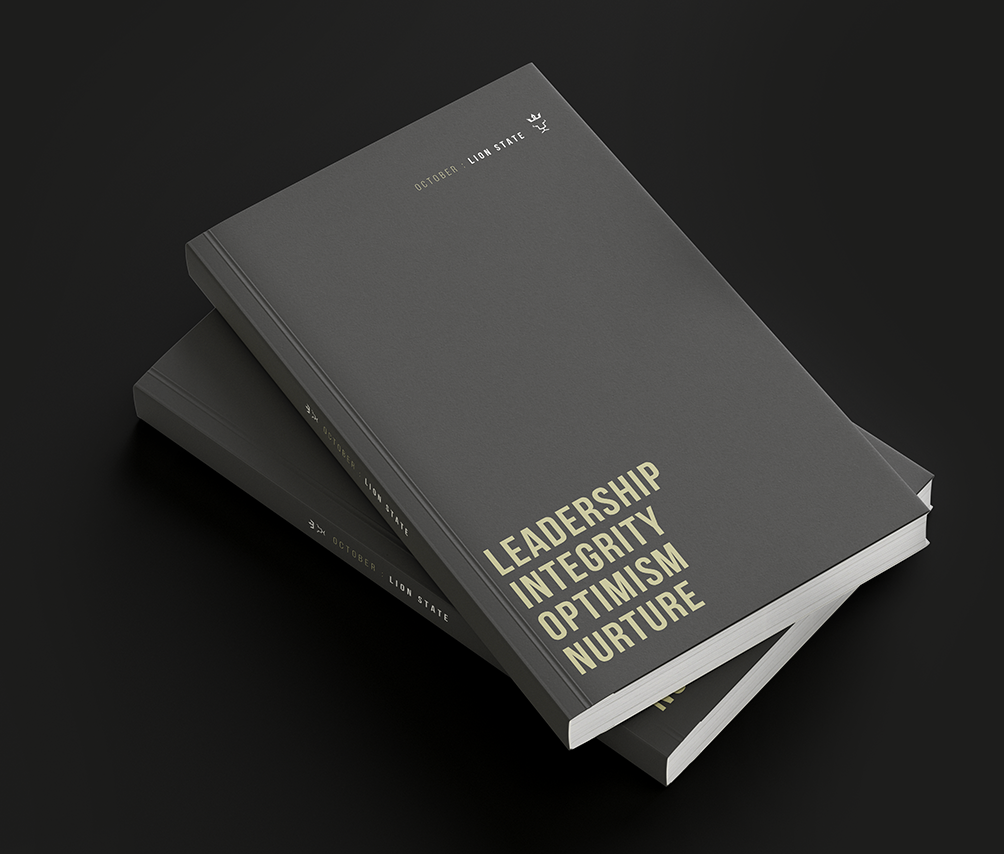
coming soon: april 2026
Secure your journey today with the Lion State Framework and see your mindset, habits, and life transform.
Step into Leadership—Transform Your Life Today Your transformation starts
now. With Lion State’s clear plan and supportive community, you’ll gain the clarity, confidence, and tools you need to lead with purpose and intention.
Fuel Your Mind
Get inspired, stay motivated, and challenge your perspective with these thought-provoking reads.

Why You Need a Not-To-Do List (Yes, Seriously)
Why You Need a Not-To-Do List (Yes, Seriously)Let’s face it, life without a to-do list is like tea without a biscuit. Unthinkable, right? After all, to-do lists have been around forever—Leonardo Da Vinci had one, Ben Franklin was all over it. And, they work! Well,...

How to Support Someone with Anxiety Without Being Awkward About It
How to Support Someone with Anxiety Without Being Awkward About ItAlright, so someone you care about has anxiety, and you’re wondering how not to make it worse. Relax. First of all, the fact that you’re even thinking about it already makes you an awesome human. But I...

How to Start a Morning Routine Without Feeling Like You’re Joining a Boot Camp
How to Start a Morning Routine Without Feeling Like You’re Joining a Boot CampGoing from zero routine to a strict, all-or-nothing approach is the quickest way to burn out before breakfast. Instead, ease into it with 15-minute increments. Want to start running 5k every...