
She Said “Talk to Me.” And Something Died.
It wasn’t dramatic.
No slammed doors. No shouting. No betrayal.
Just a quiet shift in the room.
She said, “Talk to me.”
And you did.
You finally dropped the guard. You explained the pressure. The doubt. The part of you that’s been carrying everything and still feeling like it’s not enough.
You chose your words carefully. You weren’t blaming. You weren’t attacking. You were trying to be mature about it. Regulated. Honest.
For a moment, there was relief.
Like setting down a weight you’ve been pretending wasn’t heavy.
Then something subtle happened.
Her eyes changed.
Her body language tightened.
The warmth cooled half a degree.
Nothing obvious. Nothing you could call out without sounding paranoid.
But you felt it.
And once you feel it, you can’t unfeel it.
That slight pullback.
That fractional distance.
That unspoken recalibration.
You didn’t just feel heard.
You felt assessed.
And in that moment, something small died.
Not the relationship.
Not the love.
The edge.
The energy.
The sense that she leaned into you.
You left that conversation lighter.
But somehow less desired.
And that’s the part no one talks about.
The Story We Tell Ourselves
When intimacy shifts after you open up, your nervous system does what it’s wired to do.
It writes a survival narrative.
“I showed weakness.”
“I’ve killed attraction.”
“She doesn’t see me the same.”
“This is how it starts ending.”
So the conclusion forms.
Talking isn’t the answer. Direction is.
But if we’re serious about this conversation, we need more than instinct.
We need evidence.
Because the truth is more nuanced.
What The Research Actually Shows
Relationship science does not support emotional suppression.
The work of John Gottman shows that couples who respond to each other’s emotional bids tend to have stronger long-term bonds. Turning toward vulnerability builds connection.
Attachment research, including the work of Sue Johnson, shows that emotional accessibility and responsiveness create secure bonds. Secure bonds increase intimacy.
So vulnerability itself is not the killer.
But there’s a layer most people miss.
Gottman also identified what he called “flooding.” A state of emotional overwhelm where the nervous system moves into fight, flight, or shutdown. In flooding, connection drops and defensiveness rises.
If your openness comes out dysregulated, intense, or repetitive, the body of the person opposite you can experience it as stress, not closeness.
Stress and desire do not coexist well.
The Collapse vs The Share
There’s a difference between sharing from centre and collapsing into someone.
Sharing sounds like:
“I’ve been under pressure. I’m sorting it. I wanted you to understand where I’m at.”
Collapse sounds like:
“I don’t know what I’m doing. I can’t handle this. I need you to fix how I feel.”
One communicates ownership.
The other communicates loss of direction.
Psychology backs this up. Self-Determination Theory highlights autonomy and competence as core human needs. When someone appears to lose autonomy or competence, relational dynamics shift. Attraction is not just emotional. It is perceptual.
If vulnerability signals depth plus agency, it can increase closeness.
If vulnerability signals instability, it can quietly cool polarity.
Co-Rumination Disguised As Intimacy
There’s also the trap of co-rumination.
Co-rumination is excessive problem talk without resolution. It creates short-term emotional bonding but increases long-term distress.
If “talk to me” becomes nightly dissection of everything wrong, attraction erodes.
Not because feelings are wrong.
Because stagnation drains energy.
Desire feeds on vitality. On forward movement. On growth.
Talking without direction feels like sinking sand.
Talking with direction feels like recalibration.
Why Direction Feels Magnetic
Direction does something powerful.
It restores leadership of self.
Not control over her. Not dominance.
Internal leadership.
When a man regains direction, even quietly, the room changes.
His posture shifts.
His decisions sharpen.
His energy steadies.
And steadiness is deeply attractive.
Direction says:
“I feel this. And I’m handling it.”
That’s not emotional suppression.
That’s emotional containment.
What Actually Died
Let’s return to the moment.
“She said talk to me. And something died.”
What died wasn’t love.
It was illusion.
The illusion that vulnerability alone guarantees desire.
The illusion that speaking equals connection.
The illusion that emotional openness is the whole equation.
Connection requires vulnerability.
Desire requires vitality.
And vitality requires direction.
If you open up and abandon your centre, polarity shifts.
If you open up and stay self-led, intimacy deepens.
That’s the distinction.
The Lion State Frame
Leadership.
Integrity.
Ownership.
Nurture.
Leadership of self before leadership of relationship.
Integrity in truth without drama.
Ownership of emotion without outsourcing regulation.
Nurture without self-abandonment.
You speak.
But you don’t surrender your spine.
You feel.
But you don’t drown the room.
You share.
Then you act.
Because standards without enforcement are fantasy.
The Hard Question
When something died that night, was it attraction.
Or was it drift finally becoming visible.
Was direction already fading before the conversation even started.
Sometimes talking doesn’t cause the distance.
It reveals it.
And that’s harder to face.
Because it means the work isn’t about silence.
It’s about recalibration.
Talking isn’t the enemy.
Collapse is.
Direction isn’t the opposite of vulnerability.
It’s the container that makes vulnerability safe.
And when heart and spine sit in the same body.
Very little dies.
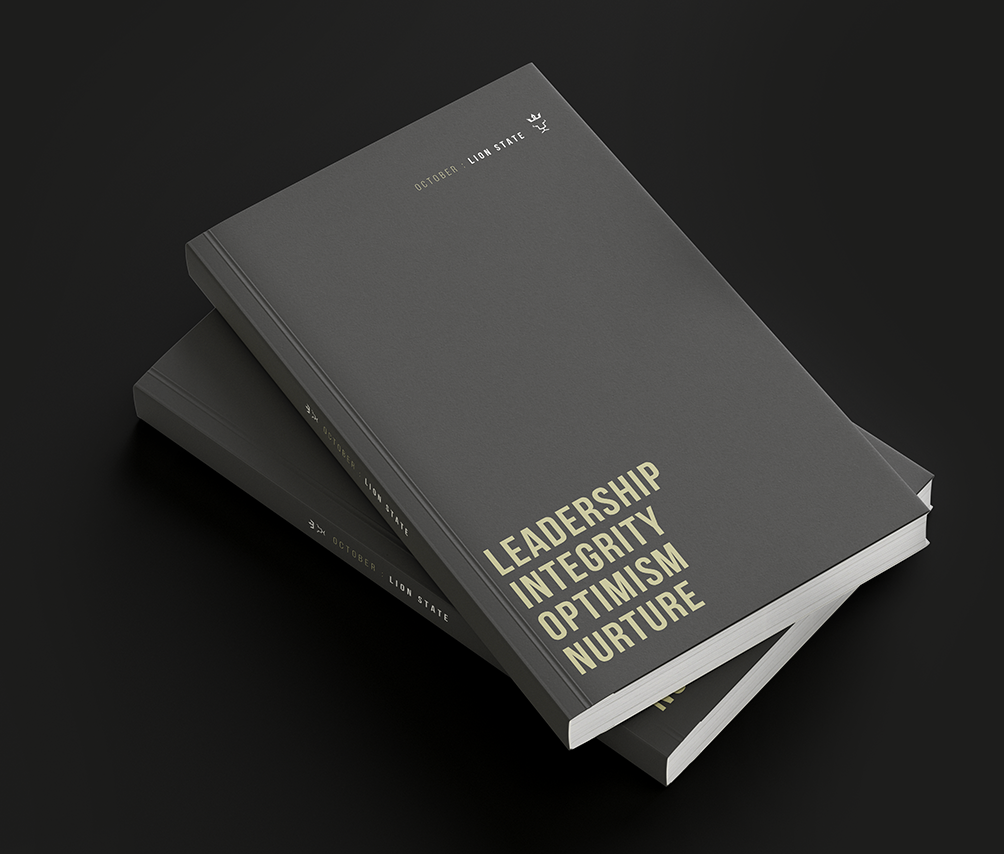
coming soon: april 2026
Secure your journey today with the Lion State Framework and see your mindset, habits, and life transform.
Step into Leadership—Transform Your Life Today Your transformation starts
now. With Lion State’s clear plan and supportive community, you’ll gain the clarity, confidence, and tools you need to lead with purpose and intention.
Fuel Your Mind
Get inspired, stay motivated, and challenge your perspective with these thought-provoking reads.

In Order To Change The Game, You Have To Adapt The Player
In Order To Change The Game, You Have To Adapt The PlayerIn order to change the game, you have to adapt the player. Not the environment. Not the circumstances. Not the people around him. The player. And right now, the conversation around men's mental health is trying...

What Nobody Tells You About Men’s Mental Health Month
What Nobody Tells You About Men's Mental Health MonthTalking is good. Let me be clear about that before anything else. Before the challenge. Before the uncomfortable part. Before the thing that Men's Mental Health Month is not saying loudly enough. Talking is good....

When It All Hits at Once
When It All Hits at OnceSome weeks don’t test you. They expose you. They don’t ask politely.They don’t give you time to prepare. They stack. One thing.Then another.Then another. Until you’re not dealing with a problem anymore… you’re dealing with everything....